On Monday, Pfizer and BioNtech announced that their vaccine is 90% effective. On the same day, not only did the shares of both companies rise, but companies in the mobility sector also jumped upward. However, the news had a negative impact on other sectors, particularly tech companies that have provided solutions to the challenges of contact restrictions and lockdowns in recent months. Additionally, this includes some chip manufacturers and companies from the semiconductor sector. (The reason is a rotation from growth and Corona winners to more defensive stocks).
Is now the right time to invest in this week's losers? This question is currently being hotly debated in the stock community. Four points that are important for you in this context.
1. The tech sector as a whole is still expensive.
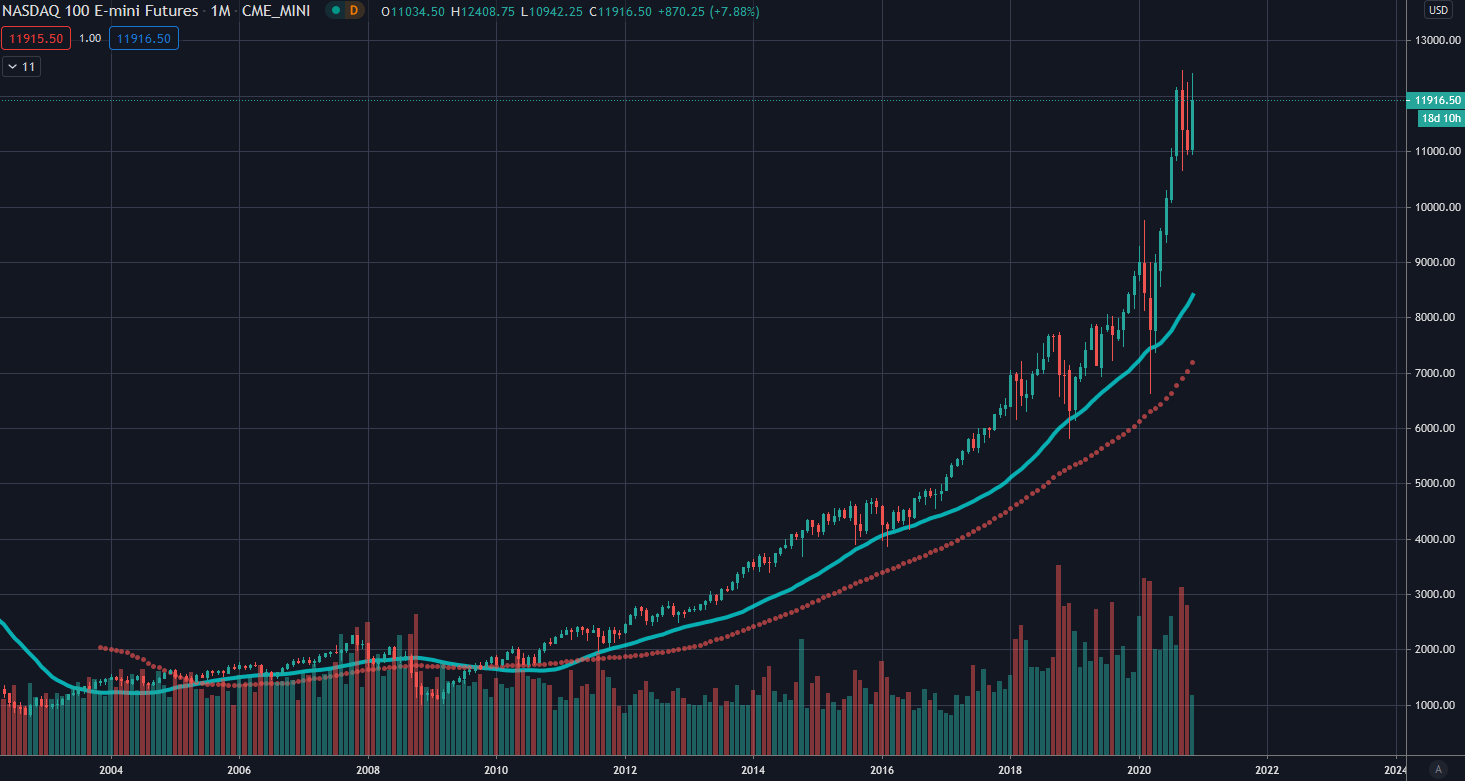
Even though some companies had to record significant price losses following the vaccine announcement, one cannot speak of a strong decline in the tech sector. The NASDAQ 100 has gained over 20% in value since its pre-Corona highs. Since the lows in March, it has risen by a staggering 106%. So, to search for buying opportunities due to excessive price losses, one must identify individual, particularly punished stocks in the sector. Zoom (-22%) and Hello Fresh (-15%), for example, have been hit particularly hard. From this perspective, a second look could be worthwhile here. (Find here the losers of the week.)
2. A vaccine does not mean the immediate end of the pandemic.
Scientists express doubts that a vaccine will immediately result in the end of the pandemic and a return to normality.
There are various reasons for this: First of all, immunological questions arise regarding the complete effectiveness and duration of immunity through the vaccine. Just as relevant, however, is the practical challenge of producing and distributing the vaccine. Because, of course, it must be considered that the Covid pandemic has global spread - dimensions that make it clear that rapid supply to the entire population is unthinkable.
Ready for Better Investment Decisions?
Start your free trial today - stock analysis with artificial intelligence.
Full Transparency | Full Access | Cancel anytime
3. Consumers have become accustomed to using online services.
The idea that Covid has only accelerated a general long-term trend toward extreme digitalization may be a bit exaggerated. While some industries are experiencing long-term positive effects, these developments will be more short-term for other industries and companies. But while the ratio of online and offline services will level off again toward "pre-Covid normality" in many areas, users will not suddenly distance themselves from digital services for video meetings, online banking, or delivery services. We have been observing a general trend toward digitalization for years - independent of Covid.
4. Continued rotation is dangerous for the overall market
Analysts are partly skeptical about whether the rotation from Corona winners to low-valued companies and Corona losers can succeed. For example, market analyst Jochen Stanzl from broker CMC Markets says it is uncertain whether the handover "from technology stocks as pandemic winners to value stocks without further ado" can succeed. "If investors get the idea to sell the Amazons and Apples of this world on a large scale, it is not certain that these proceeds will be invested one-to-one in the value stocks that have been hit hard by the pandemic and are far less growth-oriented." In the end, a correction in tech stocks could become a risk for the overall market because the accumulated price gains are concentrated in only a few stocks with very high market capitalization. It is now important to watch closely whether the shift toward value stocks will continue.
Conclusion
Ready for Better Investment Decisions?
Start your free trial today - stock analysis with artificial intelligence.
Full Transparency | Full Access | Cancel anytime
The crash of tech stocks is partly being exaggerated. A whole range of companies from the sector have recorded price gains in recent days. The NASDAQ 100 stands 4% below its all-time high and has gained 35% since the beginning of the year.
It is unclear whether the repricing after the news is already complete. In such a situation, one should not overrate news. By now, everyone should have realized: Covid dominates the news and headlines - and the market reacts to it. Covid news sells, is therefore particularly strongly pushed by the media and absorbed by the population. This has an impact on market sentiment and thus on prices.
All in all, investors should currently remain calm and not act hastily. Nevertheless, the current situation could represent a good opportunity to keep an eye out for low-priced companies in the previously highly risen sector of "Corona winners." On the other hand, further weakness in this area would burden the overall market, as the large gains since Corona rest largely on the shoulders of these companies.
Author: Emma Philipp (The author does not own any of the mentioned stocks.)
