How the disadvantageous calculation of inflation rates affects private individuals.
The topic of inflation has been hotly debated for years and there is a strong discrepancy between the perceived and calculated increase in consumer prices. We explain how this discrepancy occurs and what effects it can have on private individuals.
Despite unprecedented loose monetary policy, the constant pressure of banknotes and non-existent interest rates, inflation refuses to enter the target corridor of just under 2%. Not even close, as it moves on average just above the 1% mark. So say the official figures, so say the proclamations of economists, politicians and central banks. And so goes the justification for ever new rescue, subsidy and stabilization packages as well as the endless expansion of the money in circulation.
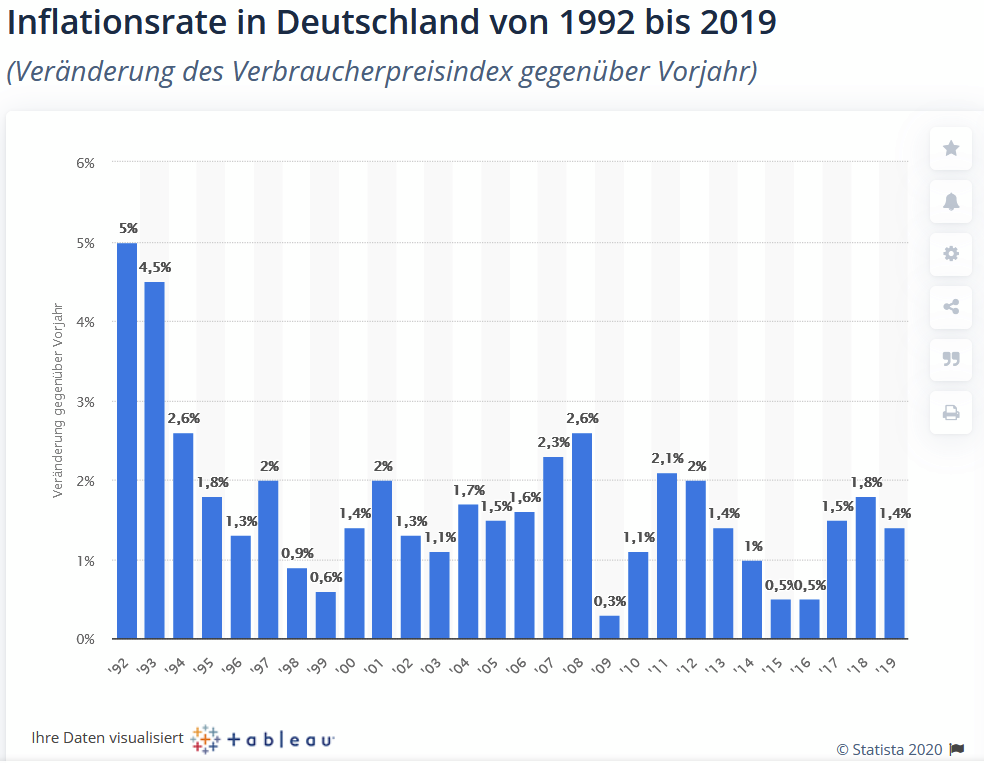
According to official figures from the Federal Statistical Office, inflation over the last 10 years averaged 1.3% per year. This results in inflation, i.e. a price increase, of 14.1% since 2010 (Source: Country Data). These official figures deviate significantly from the subjectively perceived inflation rate. Is the reason for this discrepancy therefore in the calculation or the perception of the price change?
What we can learn about inflation from the Döner price index
Ready for Better Investment Decisions?
Start your free trial today - stock analysis with artificial intelligence.
Full Transparency | Full Access | Cancel anytime
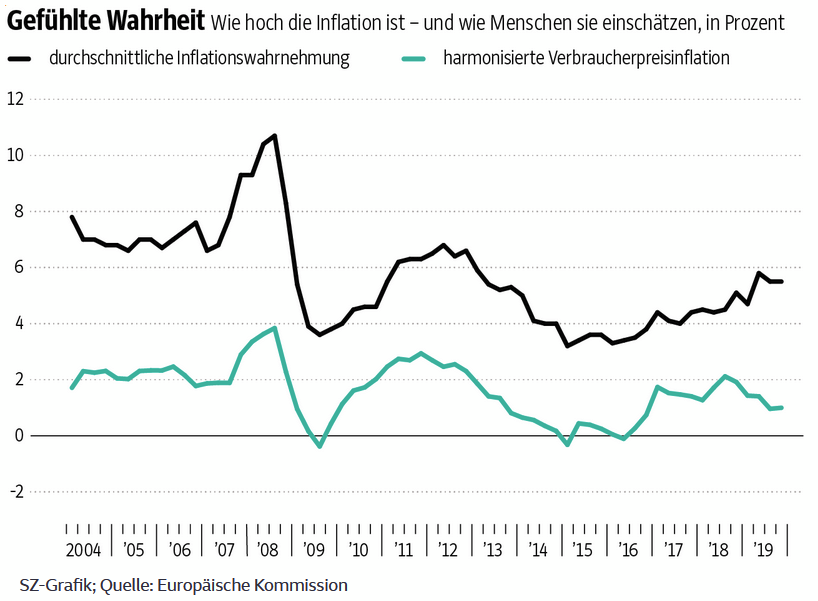
For inflation observations, the proprietary Döner price index in Berlin can be used, for example. The Döner price in Berlin represents food costs well, as it contains a wide selection of typical foods such as bread, meat, dairy/egg products and salad. In addition, the price must closely adapt to the price development of raw materials due to strong competition. 10 years ago, a Döner typically cost 3 €, today it costs 4.50 €. That is an increase of 50%. Of course, this is only a small excerpt from the consumer price index basket, but the discrepancy between 14% and around 50% is strikingly high. Interestingly, however, the figure corresponds quite well with the average perceived inflation rate of 5% annually, which would mean around 63% over the last 10 years.
How "hedonic price adjustment" suppresses inflation.
The answer lies in the "hedonic price adjustment" of the consumer price index (see Country Data). A hedonic valuation method includes the intrinsic and extrinsic value of an object (see Wikipedia). Simply put, this means that if a product improves to the same extent as it becomes more expensive, no change is reflected in the price index. An example: A new car cost an average of 18,500 € in 1999, in 2019 the average price was 34,000 €. The price has almost doubled within 20 years. However, only a price increase of 22% was included in the price index, because cars have improved significantly over the last 20 years (Source: Süddeutsche).
Now it becomes clear why mainly food and services have been rising in price for years, because they hardly improve. For everything else, the natural improvement of products (better computers, better living conditions, better cars, etc.), which one logically expects in terms of technological and social progress, is secretly and quietly deducted from the price increase and thus the devaluation of our money and our income. The faultiness of the calculations becomes particularly clear in that deteriorations of products have no impact in terms of hedonic calculation. Shorter lifespan, higher maintenance costs, that is not relevant. Not only is the loose monetary policy legitimized by the artificially low inflation rates, the level of social benefits and especially pensions also depends on the official inflation figures.
Ready for Better Investment Decisions?
Start your free trial today - stock analysis with artificial intelligence.
Full Transparency | Full Access | Cancel anytime
Effects of faulty price calculation
A thought experiment can clearly demonstrate the effects of these calculations. Suppose we experience strong technical progress and the performance of computers increases by a factor of 1,000. New apps and programs are developed that permeate our lives. We use them to control our homes, cars and routes in public transport. With one catch: The phone with the minimum equipment, which becomes a prerequisite to participate fully in this life, now costs 100,000 € instead of 100 €. However, the consumer price index shows a price increase of 0%, which assumes that the quality of the device has also increased by a factor of 1,000. Consequently, the basis for adjusting pension payments, for example, is now missing. As a consequence, the average pensioner would now not be able to raise 100,000 € for a mobile phone and could only participate in public life to a limited extent.
Price adjustment should be reconsidered in many cases.
A hedonic calculation of prices makes no sense in all areas where consumers continuously require better products. Particularly in the field of electronics, we regularly have to invest in newer products to meet increasing requirements with regard to data processing, storage space and the like. A product range naturally moves between an acceptable minimum requirement and a luxury version. A price adjustment can make sense with shifts within these limits if the average product moves in the luxury direction. However, this adjustment must also take into account a shift of the average in the basic direction. A price adjustment because today's minimum requirement is "better" than the previous one leads to faulty calculations that have serious effects especially for private individuals with less capital.
